Showing posts with label Susan Drummond. Show all posts

Saturday, 2 May 2009

5 days

or, more accurately, the 5th day.
Up, Down.

Cameco, Gerald Grandey, Not Lyle KrahnCameco, Gerald Grandey, Not Lyle Krahn"The uranium market potential in China is absolutely huge."
        Cameco spokesman Lyle Krahn in the Globe.

No pictures of Lyle Krahn? Hard to fathom unless it is intentional, whatever, the CEO, Gerald Grandey, or Gerald W. Grandey aka Jerry Grandey, is 'photographically available'.


Jenkins 09-05-02Talking about talking about talking about Armageddiyon:
        Seeking to Save the Planet, With a Thesaurus, John Broder.
        Dot Earth: What’s in a Name?, Andrew Revkin.

Lamenting 'bureaucratic nonsense' (doh!?):
        Globe Editorial: Too grave for clerical delay.


back sometime in ... must'a bin, shit, late 80s? who can remember? in those days horror was carefully planned & executed and only good things happened by accident; forgot one day, had to laugh, told the kids; with 13 days of applause and aikido skills i never had it lasted 10 years; till i ran into a woman who let me see her tits then threw me out, went straight down an' bought me some more; now? who can say? no applause, that's for sure, seems no one wants to see me a-tall, my young companion even scoffs tho that's not really a surprise; i was hoping to trade for a picture of her tits; (let's see what can be done with semicolons sez i;) it was my dentist said, "don't or you might be a drag for all of us"; combo action y'see, cross pressures; so, there goes my theory that it is self-worth in action; never bin lower & dreaming often of pink & painless exits ... and nothing in the end but polite, self-effacing invisibility. (i will work on the punctuation eh? :-) go for the seven man! nevermind the eight, it will take care of itself.

Wile E Coyoteoh yeah, forgot to mention Susan Drummond (Susan Drummond, Polygamy, Correctitude); well, i got the book, Incorporating the Familiar ... often i can't make it out, i can't tell who she is, could be, like, 'your scarf it kept your mouth well hid' or so ... but, whatever, she says some (to me) enlightening things about general concepts and the exactly specific: "There is an anxiety accompanying this understanding of general concepts that amounts to a fear that there is no certainty, no way of knowing in advance what counts and what does not." (p. 140)

could be no more than a coincidence that i happen to be reading her book at this time, or she could just be unnecessarily cribbing Wittgenstein like, there was a time everyone used to crib Maslow, can't say ...

there was another time i got here to this place, last October ...


i go into the supermarket and see the avocadoes, small, round, hard, green snooker balls ... and I buy three ... later, looking at them on the checkout conveyor belt i think of mangoes ... but these are not avocadoes, these are memories of avocadoes and a mango bought here would not be a mango, it would be watching a mango on TV, still ... i do have these memories ... peeling and eating mangoes with her over the sink, the ripe sticky juice running down our chins and elbows, and avocadoes, drenched in soy and lemon, scooped out with a spoon

and one other, in Rio Grande one night, when was it? ... ok, end of April last year ...

one night not long ago he is drinking too much with some guys at Palmas, close to the corner where the boys-dressed-up-as-girls hang out, the women who run the place obviously want to close but they stay on

a girl starts passing back and forth on the other side, they say, "that's not a girl," but he says, "yes," and eventually staggers over, she is wearing a short macramé skirt and nothing else, she lifts it up with a smile to prove the point

he takes her home, she flops back onto the bed, she wants 30, he gives her 50, she is enthusiastic and says, "I can cook too," so he says, "come back tomorrow then," and her, "we can go shopping together."

sure enough she calls and comes over, with creased pictures of her baby folded up and tucked into some invisible pocket, she sees his wallet on the table and quickly robs him, she robs him politely, leaving the small bills and ID, he doesn't even notice, when she says she is going home to get more pictures he waits on the doorstep for almost an hour

they live in the neighbourhood, he sees her on the street, he sometimes drinks at the bar on the corner, she comes in for smokes and soft drinks once in a while when he is there, the bartender gives her an approving look when her back is turned

he doesn't look though he wants to and is afraid to say, "hello."


there! oh yeah ... one more, in July ...

the tall morena aroused his honest interest and admiration. she was a waitress at the local, and when the subject of language teachers came up she said to him, "Eu tou uma boa professora - mas eu falo rápido e só falo uma vez! / I am a good teacher - but I talk fast and I only say things once!" He didn't take her up on it - it was not really an offer as far as he could see at the time, and shortly after that she was fired for mysterious reasons. But she stayed in his thoughts. Then she turned up at the shipyard where he worked one day as a welder-in-training, and then appeared with one of his few friends among the engineers. At first he was pleased, because he liked them both - but one night when he was out-and-about he came across them and neither one said hello. It was an oblique situation, nothing as overt as being snubbed, just the way things unfolded, and yet it wasn't accidental either. The engineer even denied all involvement when asked the next day. Evenually he left town, and she with him.


***************************************************************************
Seeking to Save the Planet, With a Thesaurus, John M. Broder, May 1, 2009.

WASHINGTON — The problem with global warming, some environmentalists believe, is “global warming.”

The term turns people off, fostering images of shaggy-haired liberals, economic sacrifice and complex scientific disputes, according to extensive polling and focus group sessions conducted by ecoAmerica, a nonprofit environmental marketing and messaging firm in Washington.

Instead of grim warnings about global warming, the firm advises, talk about “our deteriorating atmosphere.” Drop discussions of carbon dioxide and bring up “moving away from the dirty fuels of the past.” Don’t confuse people with cap and trade; use terms like “cap and cash back” or “pollution reduction refund.”

EcoAmerica has been conducting research for the last several years to find new ways to frame environmental issues and so build public support for climate change legislation and other initiatives. A summary of the group’s latest findings and recommendations was accidentally sent by e-mail to a number of news organizations by someone who sat in this week on a briefing intended for government officials and environmental leaders.

Asked about the summary, ecoAmerica’s president and founder, Robert M. Perkowitz, requested that it not be reported until the formal release of the firm’s full paper later this month, but acknowledged that its wide distribution now made compliance with his request unlikely.

The research directly parallels marketing studies conducted by oil companies, utilities and coal mining concerns that are trying to “green” their images with consumers and sway public policy.

Environmental issues consistently rate near the bottom of public worry, according to many public opinion polls. A Pew Research Center poll released in January found global warming last among 20 voter concerns; it trailed issues like addressing moral decline and decreasing the influence of lobbyists. “We know why it’s lowest,” said Mr. Perkowitz, a marketer of outdoor clothing and home furnishings before he started ecoAmerica, whose activities are financed by corporations, foundations and individuals. “When someone thinks of global warming, they think of a politicized, polarized argument. When you say ‘global warming,’ a certain group of Americans think that’s a code word for progressive liberals, gay marriage and other such issues.”

The answer, Mr. Perkowitz said in his presentation at the briefing, is to reframe the issue using different language. “Energy efficiency” makes people think of shivering in the dark. Instead, it is more effective to speak of “saving money for a more prosperous future.” In fact, the group’s surveys and focus groups found, it is time to drop the term “the environment” and talk about “the air we breathe, the water our children drink.”

“Another key finding: remember to speak in TALKING POINTS aspirational language about shared American ideals, like freedom, prosperity, independence and self-sufficiency while avoiding jargon and details about policy, science, economics or technology,” said the e-mail account of the group’s study.

Mr. Perkowitz and allies in the environmental movement have been briefing officials in Congress and the administration in the hope of using the findings to change the terms of the debate now under way in Washington.

Opponents of legislation to combat global warming are engaged in a similar effort. Trying to head off a cap-and-trade system, in which government would cap the amount of heat-trapping emissions allowed and let industry trade permits to emit those gases, they are coaching Republicans to refer to any such system as a giant tax that would kill jobs. Coal companies are taking out full-page advertisements promising “clean, green coal.” The natural gas industry refers to its product as “clean fuel green fuel.” Oil companies advertise their investments in alternative energy.

Robert J. Brulle of Drexel University, an expert on environmental communications, said ecoAmerica’s campaign was a mirror image of what industry and political conservatives were doing. “The form is the same; the message is just flipped,” he said. “You want to sell toothpaste, we’ll sell it. You want to sell global warming, we’ll sell that. It’s the use of advertising techniques to manipulate public opinion.”

He said the approach was cynical and, worse, ineffective. “The right uses it, the left uses it, but it doesn’t engage people in a face-to-face manner,” he said, “and that’s the only way to achieve real, lasting social change.”

Frank Luntz, a Republican communications consultant, prepared a strikingly similar memorandum in 2002, telling his clients that they were losing the environmental debate and advising them to adjust their language. He suggested referring to themselves as “conservationists” rather than “environmentalists,” and emphasizing “common sense” over scientific argument.

And, Mr. Luntz and Mr. Perkowitz agree, “climate change” is an easier sell than “global warming.”


***************************************************************************
Dot Earth: Global Heating, Atmosphere Cancer, Pollution Death. What’s in a Name?, Andrew C. Revkin, February 18, 2008.

International symbol for flammable material. (Source: cdc.gov)[UPDATE, 5/2: John Broder has written a piece examining a new call for new terminology to describe the climate and energy problems confronting the country. What words, if any, do you think would be most apt to grab attention and propel change?]

[2/18/2008:] John P. Holdren, the head of Harvard’s center on science and technology policy, is sick and tired of “global warming” — not just the problem, but the phrase. As the respondent to a panel on climate and the press at this year’s annual meeting of the American Association for the Advancement of Science in Boston (I was on the panel), he urged the media, and scientists who talk to the press, to substitute “global climate disruption” for that all-too-comfortable pair of words.

What are your suggestions for more effective ways to describe human-caused global warming?

“We’ve been almost anesthetized by this term,” Dr. Holdren lamented. The atmospheric buildup of long-lived greenhouse gases is setting in motion centuries of shifts in climate patterns, coastlines, water resources and ecosystems, he said — hardly a transformation one would describe with a gentle word like warming. (A couple of perspectives on the broader issues we explored in this session are on the blogs of Discover magazine and the journal Nature.)

[UPDATED 2/18: An early version of this post (written late at night, had Dr. Holdren saying "instability" instead of disruption.]

Dr. Holdren’s suggestion, which he has elaborated on here, reminded me of James Lovelock’s push for “global heating” as the most apt name for human-caused climate change.

James Lovelock (Credit: Suzanne DeChillo/The New York Times)When I did an interview with Dr. Lovelock in 2006, after his book “The Revenge of Gaia” was published in the United States, he explained his word preference this way: “Warming is something that’s kind of cozy and comfortable. You think of a nice duvet on a cold winter’s day. Heating is something you want to get away from.”

After that interview, I did some Web sifting and found a site set up (but not yet built) by Simon Billinge, a physicist at Michigan State University, promoting the idea, suitably called globalheating.org. I hope he expands it.

In an email, Dr. Billinge said he’d been exploring ways to show people how the heat buildup from an increasing greenhouse effect can take time to produce significant consequences. In fact, the demonstration, described below by Dr. Billinge, may help answer the many critics of greenhouse theory on this blog who point to recent cool flutters of climate as evidence that global heating is a fantasy:

I had an undergrad non-physics major do a summer project. The basic idea was the following: educate people about the differen[ce] between heating (transfer of energy) and warming (raising the temperature) and how it pertains to global climate. The greenhouse effect affects the global energy budget (net heating of the earth), global warming and climate change [are] the response of the system to being in this non-steady-state condition and because the earth is a complicated system, we don’t completely know exactly how it is going to respond.

We did an experiment where we made a video of a Bunsen burner heating… a beaker of ice and water (that was being stirred) and we plotted the temperature as a function of time. Of course, the temperature stayed constant at 0 degrees C until all the ice melted, then it started going up up up. This showed that something can be “heated” without “warming”… in fact measuring temperature is not such a great way to determine if you are in that net-heating situation or not. Oh, and by the way, a beaker of ice and water isn’t such a bad model system for the earth….though there are differences.


There’s one more thought about “global warming” that’s worth adding here. In 2006, Seth Godin, a popular marketing expert, examined the climate communications challenge from from vantage point of a pitchman:

Is the lack of outrage because of the population’s decision that this is bad science or perhaps a thoughtful reading of the existing data?

Actually, the vast majority of the population hasn’t even thought about the issue. The muted reaction to our impending disaster comes down to two things:

1. the name.

Global is good.
Warm is good.
Even greenhouses are good places.

How can “global warming” be bad?

I’m not being facetious. If the problem were called “Atmosphere cancer” or “Pollution death” the entire conversation would be framed in a different way.

2. the pace and the images.

One degree every few years doesn’t make good TV. Because activists have been unable to tell their story with vivid images about immediate actions, it’s just human nature to avoid the issue. Why give up something we enjoy now to make an infintesimal change in something that is going to happen far in the future?


We’ve explored the limits of language in situations like this, but it’s worth pushing on this some more. What framing or phrasing do you see capturing peoples’ attention in a way that might stick?


***************************************************************************
Globe Editorial: Too grave for clerical delay, May 1, 2009.

The World Health Organization's stated determination to quickly develop a vaccine in response to the Influenza A(H1N1) outbreak is a wise precaution. Far better that the WHO risk criticism for being overcautious in the event that the flu peters out, than that the feared pandemic gets a foothold, and large numbers of people die, because authorities hesitated to act. Questions are already being asked about bureaucratic delays that possibly hindered the early response to the outbreak. The pattern must not be repeated with a vaccine.

On April 16, Mexico reported the emergence of “alarming occurrences of flu and atypical pneumonia” to the Pan-American Health Organization (PAHO), a regional body of the WHO. It was not until April 24 that the WHO reacted, announcing it was very concerned about the potential for a pandemic. While PAHO officials say Mexico's alert was automatically reported to its parent body, Mexico's chief epidemiologist, Dr. Miguel Angel Lezana, disputes the contention, suggesting it took days for the WHO to be notified by PAHO. Yesterday, PAHO officials argued that, while the WHO had indeed been promptly notified, there had been a delay in alerting other countries. The responsibility for the delay was due to the failure of Mexico to give its permission, a PAHO spokesman said.

This is the sort of bureaucratic nonsense that cannot be tolerated when the stakes are so high. If H1N1 emerges as the pandemic strain that health officials have long feared and warned against, then that eight-day delay may prove to have been very costly indeed. Human lives should not be sacrificed because of incomplete paperwork. Dr. Lezana is correct to call for an investigation of the PAHO and WHO handling of first news of the outbreak, and the role of Mexico in the delay must also be examined. It is outrageous to think that a multinational health organization, once alerted to a disturbing outbreak of flu and pneumonia, would wait idly by because a Mexican official had allegedly failed to fill out a permission form. The WHO must do better in its response to emerging threats in the future, and in the meantime pursue a vaccine with urgency.


***************************************************************************
Cameco in talks to fuel China's power needs, Andy Hoffman, May 2, 2009.

China, with ambitious plans to boost the amount of electricity produced from nuclear power, is in talks with Cameco Corp. CCO-T about a potential uranium supply agreement.

The Asian giant has become a significant buyer of the radioactive metal on the spot market as it increases its nuclear power capacity, and has entered talks with Saskatoon-based Cameco, the world's largest uranium producer.

China is actively taking advantage of weak prices to secure supply of the metal used to make nuclear fuel.

A spokesman for Cameco confirmed the company is in discussions with Chinese officials about a supply deal. The company also said power utilities, including state-controlled Chinese entities, have accounted for half of recent purchases on the uranium spot market.

"When you talk about utility buying, a good portion of that would have to be attributed to the Chinese. In their case, they are looking to stockpile significant quantities of inventory for the Chinese program," George Assie, Cameco's senior vice-president of marketing and business development, said on a conference call.

Chinese demand for uranium could underpin a recovery in spot prices, which have recently hit $44 (U.S.) a pound after plunging to about $40 from a peak of $135 in 2007.

Stockpiling of copper by China has driven a recovery in prices of that metal. Copper has rallied from recent low of $1.25 a pound to above $2.

Cameco spokesman Lyle Krahn said the company is currently in discussions with China regarding a potential uranium supply agreement.

The Asian superpower expects to have 75 gigawatts (a gigawatt is one billion watts) of nuclear power generating capacity by 2030.

That represents just three-quarters of current capacity in the U.S. - the largest nuclear power producer - and only 10 per cent of China's total electricity demand.

"The uranium market potential in China is absolutely huge," Mr. Krahn said.

Scotia Capital Inc. China strategist Na Liu said the market is underestimating the speed at which China is adding nuclear capacity.

He is forecasting that China will have total nuclear capacity of 35 gigawatts by 2015 and 75 gigawatts by 2020, up from the 9.068 gigawatts operating today.

China is currently building 20 new nuclear reactors, with approximately one gigawatt of capacity each.

Scotia Capital predicts that by 2020, China will consume 15,700 tonnes of uranium a year.

"At this rate, China's currently known uranium resources can only last for five to 10 years. Clearly, in our opinion, it is imperative for China to secure long-term supply through imports or investment," Mr. Liu said in a recent note.

China has also recently held discussions with Australian producers regarding potential supply agreements.

A group of Japanese utilities recently struck a long-term uranium supply deal and took an equity stake in Toronto-based producer Uranium One Inc., while a South Korean consortium struck a similar deal with Denison Mines Corp.

The news about China's rising nuclear-power ambitions came as Cameco said its first-quarter profit fell 38 per cent, missing analysts' estimates. Costs were boosted by purchases of uranium at above-production prices for future resale.

The company raised its 2009 sales forecast slightly.

Cameco's uranium purchases - part of a plan to benefit from a longer-term rise in the price - contributed to a rise in uranium production costs to $220-million in the quarter from $169-million in the same quarter a year ago.

Faced with analysts' questions on a conference call, chief executive officer Jerry Grandey defended the purchases as a longer-term trading strategy.

"Down the road, we will realize additional revenue and earnings as we deliver the purchased material to our customers," he said.

The higher costs helped pull down profit to $82-million or 22 cents a share, from $133-million or 37 cents a year earlier.

Excluding one-time items, the company said it earned $89-million or 24 cents, missing the 33-cent profit expected by analysts polled by Reuters Estimates.

Quarterly revenue rose 4 per cent to $615-million, as uranium production rose 26.3 per cent to 4.8 million pounds, while the company also had stronger results at its electricity generation business.

***

CAMECO (CCO) Close: $29.15, up $1.75

Q1 2009 2008
Profit $82-million $133-million
EPS 22¢ 39¢
Revenue $615-million $593-million

Source: Company reports

Down.

Monday, 6 April 2009

Susan Drummond, Polygamy, Correctitude

Up, Down.

Got interested in this woman last year when she published an opinion piece in the Globe, You really want them all charged? (below). What piqued my curiosity at the time was her forthright revelation of personal history: "Without going into details, two years after my separation, I entered another 'conjugal union' with my partner of the last seven years," and so on. Not deeply personal, but deeper than expected - and it revealed another trait viz. (at least apparently) operating out of your own reality rather than some theoretical ideology. And today she published another ... so here they are.

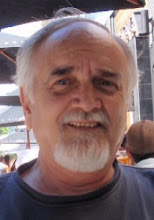
Susan DrummondSusan DrummondSusan Drummond

What adds to my interest is thinking of this person operating within (what I imagine to be) the fairly stupid intellectual environment at York University - hanging out with wazzername ... Gillary Massa and such like ... either face-to-face with correctitude, or somehow coexisting with it. Who knows? Some of the commenters on her latest Globe piece were suggesting (if you can call mindless ranting a suggestion) that she is one of these correct nitwits ... could be I guess ... can't say yet ... the pictures I could find of her and her use of mealy mouthed terms such as 'conjugal union' and 'partner' notwithstanding ... reminds me of Frye's quip, "If I were a primrose by a river's brim, I should feel insulted," in reference to Wordsworth's poem.

Anyway ... four articles in the Globe reproduced below, and two books: Incorporating the Familiar, at the publisher's site, McGill-Queen's University Press (MQUP), and (sort of) at Google Books, and,
Mapping Marriage Law in Spanish Gitano Communities, at the publisher's site, University of British Columbia Press (UBCPress), and at Google Books (not!).

I have ordered the books and will report later. Anyone needing insight into what Google is really good for can follow the links to the Google Book versions above. A joke, a bad joke ... I wish someone clever would hack their server and put it all out on uTorrent ...

Also remembering slurs from my days at McGill ... JAP, Jewish American Princess ... goes to show that nothing is ever fixed, nothing is ever gotten over, nothing overcome or sorted out ... the waste-bin you drag along and rediscover at your side again and again like Peer Gynt's troll child ... abiding proof that you have messed intimitely with ugliness at least once.


Appendices:
1. Short Bio on Osgoode/York site.
2. Not just Muslim women are exploited by 'religious' law, September 9, 2005.
3. Beyond cartoons, February 11, 2006.
4. You really want them all charged?, August 5, 2008.
5. A marriage of fear and xenophobia, April 6, 2009.


***************************************************************************
Short Bio on Osgoode/York site.

BA, BSW (Dalhousie), BCL, LLB, MSW (McGill), DEA (Aix Marseille) DCL (McGill)

Associate Professor Susan Drummond joined Osgoode’s faculty in 1999, and specializes in the areas of legal anthropology, comparative law, civil law, and family law. She was the first student in Canada to graduate with both a civil and common law degree as well as a Master's in Social Work. Her BA in philosophy and her postgraduate Diplôme d'Etudes Approfondies from the Université d'Aix-Marseille, specializing in legal theory and legal anthropology, make her a truly interdisciplinary scholar. She has published two books, Incorporating the Familiar: An Investigation into Legal Sensibilities in Nunavik, based on her undergraduate fieldwork in Inuit communities in northern Quebec, and Mapping Marriage Law in Spanish Gitano Communities,which won the Canadian Law and Society Association/Association canadienne droit et société 2006 Book Prize.

Areas of Interest: Family Law, Legal Theory, Comparative Law.

E-mail: Susan Drummond sdrummond [at] osgoode.yorku.ca
Assistant: Hazel Pollock hpollock [at] osgoode.yorku.ca


***************************************************************************
Not just Muslim women are exploited by 'religious' law, Susan Drummond, September 9, 2005.

A front-page story in yesterday's Globe and Mail drew attention to the case of "Shinaz," a Muslim woman who was coerced by religious law and her imam into forfeiting support and property rights in order to get a religious divorce.

The full facts are a little bit buried in the latter part of the story, so let me bring them to the fore again: Before going to the imam, Shinaz went to a Canadian lawyer, worked out a separation agreement and got a settlement on child support, property and child custody. She then also got a divorce in a Canadian court. Following this, she wanted a religious divorce, though absolutely nothing in Canadian law compels, or indeed urges or even suggests, that she do so. What followed in the religious arena illustrates a long-standing tension between religious law and state law -- a tension that is in no way exclusive to Islam.

In the religious forum to which Shinaz voluntarily submitted, she found herself up against a potentially very exploitative wall.

Orthodox Jewish women have found themselves in that position for decades.

The Canadian state allows for civil divorce with all of its corollary relief (support, custody etc.). Orthodox Jewish law (the form of religious law that governs family law matters in Israel) demands that, if an Orthodox woman also wants to be released to remarry or to bear future children that would not be bastards (mamzarim) in Jewish law, she must go through a religious procedure to do so. Until she gets a Jewish bill of divorce -- known as a gett -- she is a bound woman, an agunah -- with potentially dire consequences associated with both Jewish law and Israel. The odd Jewish husband has long been exploiting this vulnerability by threatening to withhold the gett unless the wife, who is civilly divorced, agrees to forgo a long list of civil rights that she has already acquired (custody of the children, child support etc.) or is in the clear position to acquire according to Canadian law. I should state that this exploitation by a small number of Jewish men is also a thorn in the side of both Orthodox Judaism and the state of Israel.

Recognizing the extraordinary vulnerability that these Jewish women (analogous to Shinaz) find themselves in, the Canadian state and the provinces have long intervened to circumvent this kind of "religious" exploitation of state law -- or rather the exploitation of the intersection between the two. And, as multicultural as Canada is, we have done so in a way that is both creative and religion-neutral. Federal legislation allows for judges to stay civil divorces (e.g., of the Jewish man who wants to remarry but who wants to bind his wife for eternity in a religious marriage) if all barriers to religious marriage have not been removed. Under provincial and federal legislation, the civil courts will, if asked by one spouse, prevent the other from litigating on any issue pertaining to the divorce or separation (even, for example, preventing him from entering a defence to an astronomically high child- support claim) unless the latter has done all that is within his power to remove all religious barriers to remarriage.

In my opinion, Shinaz would have done well to do what countless Jewish agunot have done: Sue her husband for, say, a gargantuan increase in child support against which her ex-husband cannot raise a defence until all religious barriers to remarriage are removed. If it's important to Shinaz to remain devout to her religion and its institutions, she could have followed the letter of the latter's law while invoking the letter of Canada's parallel secular law -- all the while showing herself to be a devoutly law-abiding citizen.

With Canada's long and creative history of accommodating cultural and religious differences within the bosom of a secular state, Canadians have generated an ever-evolving model of the modern multicultural state that should be an inspiration to the world. The laws to which I allude have been around for a while to deal with the interaction between state law and Jewish religious law. If they need some tinkering to deal with other religions (again in language that does not single out a particular religion), then let's do that rather than single out the Muslim religion for a singular form of paranoia.

Susan Drummond, professor of family and comparative law at Osgoode Hall Law School at York University, holds a federal research grant to look into marriages within Israel's mixed legal jurisdiction.


***************************************************************************
Beyond cartoons, Susan Drummond, February 11, 2006.

There's a lot we can learn about ourselves from the discomfort of others, says law professor Susan Drummond.

The recent furor over cartoons depicting the Prophet Mohammed brings to mind the admonition of French philosopher Simone Weil, who had debilitating migraines: "When I behold evil in the world, I must recollect to myself that when I am suffering from one of my headaches, I am overcome with the urge to strike out and hit somebody in the exact same spot in my head that I am hurting."

The whole cartoon debacle, which lamentably appears to be not fully spent, reminds me of another moment when the atmosphere was electrified with a similar climate of devastation, anguish, animosity, and suspicion.

A week into the first time I taught comparative law, the twin towers of the World Trade Center came down in front of the eyes of the students, staff, and faculty who gathered, aghast, in front of the electronic message board in the lobby of our law school. Ten minutes later, I was supposed to start teaching a diverse group of students the intricacies of common law, civil law, aboriginal law, Talmudic law, and Islamic law. Speechless myself, I cancelled the class and told the students who dribbled in, hollowed out, that I would be available if anybody wanted to talk. Somehow, we managed to get the course back on track over the next several weeks. And then, an interesting thing happened, not unlike the current debate about the relationship between the values of the secular and religious worlds.

I had just passed out a photocopied page of the Talmud so that students could see, graphically, how the spiralling and open-ended commentaries of one of Judaism's religious and legal texts contrasted with both Napoleon's and Justinian's efforts to bring all commentary to an end once their civil codes had been promulgated. During the break, I could see, out of the corner of my eye, one of my very devout Muslim students approach a very devout Lubovitch Jewish student. They had a small confabulation, and then they approached me. I was informed, by both, that passing out a page of a Jewish Holy Book was a particularly insensitive thing to do as it contained the name of God upon it and could be subjected to all manner of disrespectful treatment, even unwittingly, by those insufficiently versed in its holiness. I was further informed that the reproduction of the Koran on the cover of the comparative law text that I had selected that year was also prone to cause offence, reproducing, as it did, an image of the Koran. The Muslim student informed me that he felt compelled by his religion to cleanse himself each time he read the text and added, tongue in cheek I assume, that he could not take the book into the washroom with him as other students might.

I was completely taken aback by the intervention of these two students. I asked them what they wanted me to do in response to their concerns. They suggested I should ask the rest of the students to return the photocopied sheets of the Talmud to the Jewish student so that he could dispose of them in a manner consistent with the significance they held for him. I invited them to make the request of their colleagues. At the end of class, each student respectfully complied.

The exchange left me uneasy and unsettled about what had just taken place, and I remain so to this day. Osgoode is a secular institution, resting upon centuries of the same cherished traditions that infuse the value of freedom of speech. I am not teaching about any legal tradition under the assumption that its core tenets are inherently worthy of respect. I am teaching about each of them from the vantage of a critical distance cultivated over millenniums. Consistent with deeply entrenched values within the academy, I urge students to subject their understandings -- from the most commonplace to the most sacrosanct -- to the light of critical scrutiny.

And yet, I am aware that the familiar academic stance of detachment has the potential to objectify and thereby distort the object of its inquiry, particularly when the subject relates to an aspect of human society. I am also aware that such detachment is itself a deeply held and historically conditioned value, for which some of us have been prepared to die. One hears echoes of the virtues of that detached stance in recent commitments to the right of freedom of speech, some heartfelt and thoughtful, others callow.

I believe that things were resolved that day in an admirably pacific (and prototypically Canadian) manner. Indeed, Omar, the ever-mischievous Muslim student who initiated the exchange, presented a paper with me on the event at an international conference on law and society the following spring.

What if, however, there had been students who, within their rights (I believe), felt that the request that they treat religious texts with reverence was disconsonant with their own deeply held beliefs? What if they further argued (with reason, I believe) that the request was not wholly appropriate to the diverse and overarchingly secular law school environment? What if they declined to submit to the request of those two devoutly religious students?

I still don't know what I would have done, though I am almost certain that the ensuing conflict would have been fuel, propelling us to a deeper and more fine-grained understanding of each other. Comparative law begins from the premise that she who understands one legal tradition understands none, or to quote script from a sculpture on the campus of York University, a fish only recognizes water when it discovers air. Taking into account that the study of law touches upon values that also embody different senses of injustice, I urged my students that year not to simply understand unfamiliar texts and traditions from the vantage of a cold and purportedly neutral detachment, but to follow another of Simone Weil's admonitions: to understand the self from the point of view of the other's affliction.

I continue to be buoyed by the very fact that, in the electrified atmosphere that shot through the law school, the campus and, indeed, the world in the weeks following 9/11, a devout Muslim student felt moved to approach a devout Jewish student to query him about whether he felt pained by the way that a secular professor had handled one of his holy books -- and that they respectfully approached me and their colleagues with their concerns.

In the spirit of that year's comparative exercise, I hope we continue to shore up the compulsion to understand that keeps the ivory tower of the university, along with many of the other foundational structures of human society, in place.

Susan G. Drummond is a professor of comparative law at Osgoode Hall Law School at York University in Toronto.


***************************************************************************
You really want them all charged?, Susan Drummond, August 5, 2008.

You might be surprised who would get caught in the dragnet.

There is a general rumbling afoot in Canada about laying polygamy charges against individuals within certain religious communities across Canada. But there are some things Canadians need to know about our Criminal Code's "Offences Against Conjugal Rights" before we can be sure we really want to open that particular Pandora's box. One thing to ask may be whether you, or anyone you care about, has committed one of these indictable offences carrying liability of up to five years in prison. In the spirit of the poem "They came first for the communists...," let me say that I have committed polygamy.

How is it that a Canadian professor of family law violated a very grave criminal prohibition - and yet remains on the lam; teaching the law, no less?

The first thing to know is that Canadians are not a morally squeamish group when it comes to sex - or sex and marriage. Group sex, the Supreme Court of Canada has held, even group sex in swingers bars in downtown Toronto, does not offend Canadian moral sensibilities. Nor does it offend the institution of marriage. For a divorce based on adultery, neither spouse can have condoned the other's extramarital sex - and swinging with your spouse at Ménage à Quatre almost certainly constitutes condonation. Swingers who want a divorce have to wait out one year's separation like the rest of us.

The second thing to bear in mind is that the polygamy provision has been invoked exactly once in the past century - in 1937. A man was charged with polygamy because he had an adulterous affair. The court held that adultery is not inconsistent with monogamy - and both he and the rest of our society have been free thereafter to have adulterous affairs with criminal impunity. Since the Divorce Act of 1986, spouses also have been free to commit adultery without consequence to determining child custody, support or division of property. Canadian law has left the adulterous to little more than the wrath of their spouses.

The third thing to know is the actual definition of both bigamy and polygamy in the Criminal Code. Amongst other elements, the offences include everyone in Canada who, being married, goes through a form of marriage with another person (bigamy) and everyone who enters into any kind of conjugal union with more than one person at the same time, whether or not this conjugal union is by law recognized as a binding form of marriage (polygamy).

Religious marriage (Catholic, Hindu, Muslim, Jewish etc) is a "form of marriage." Canadians can be civilly divorced and yet remain religiously married. The state, having no place in the religions of the nation, carries out only civil divorce. All Canadians, regardless of religious background, have equal access to the Divorce Act that allows for divorce on the grounds of the breakdown of the marriage (established by living separate and apart for one year, or by the adultery or cruelty of the other spouse). Catholics can never divorce religiously - and yet they can (and do) divorce and remarry civilly. Those who have done so (along with other Canadians who have not put an end to their religious marriage before remarrying civilly) are both in multiple conjugal unions and multiple forms of marriage. So, should the state decide to sweep up all those polygamists, many of us might be astonished at how many of our acquaintances and loved ones would be carted away.

Where I, and countless other Canadians, unwittingly committed polygamy derives from the inclusion of "any kind of conjugal union" in the definition of polygamy.

Like 38 per cent of Canadians, I both married and divorced. Like many Canadians, I was somewhat nonchalant about the institution of marriage. As common-law relationships gather about them all of the benefits of marriage and increasingly little social stigma, marriage has become a principally symbolic institution. While sorting out the incidentals of divorce (custody, support, etc.) was important to me, getting the actual divorce was not. Unlike the other weighty elements of Canadian family law, all a divorce enabled me to do was to remarry civilly. As I had no desire to remarry, I was living separate and apart from my "husband" for six years before I got a divorce (in order that he might remarry). My marriage was, if nothing else, the paradigmatic "conjugal union."

Without going into details, two years after my separation, I entered another "conjugal union" with my partner of the last seven years. This was not hard to do. The definition of "conjugal union" in Canadian law is broad enough that just about any kind of detail has the potential to be simultaneously sordid and banal.

What is "any kind" of conjugal union? On this point, the criminal law is silent. In family law, the definition of conjugal union used to include things such as the sharing of meals, sexual exchange, watching TV together (I kid you not) and the delivery of domestic services. With sexual and domestic services sitting uncomfortably with the obligations of conjugality, eating pizza with someone, while watching Sopranos reruns, could catch quite a few of us off guard.

In all fairness, I might call myself in to Crime Stoppers. If I am free to go, then with the current gapingly broad definition of an Offence Against Conjugal Rights, doesn't the state have an unfettered discretion to indiscriminately go after religious communities and individuals?

Susan Drummond is Professor of family law at Osgoode Hall Law School.


***************************************************************************
A marriage of fear and xenophobia, Susan Drummond, April 6, 2009.

Canada signed the international Women's Convention in 1980, and thereby committed itself to "take all appropriate measures to eliminate discrimination against women in all matters relating to marriage and family relations." The convention recommends that states acknowledge that "polygamous marriage contravenes a woman's right to equality with men." Is there a way to square the decriminalization of polygamy with our international commitment in a way that does not prey on our fear of those who are different from us?

The Criminal Code's polygamy section, from its inception through its bizarre history of virtual non-use, has always been shrouded in an aura of xenophobia and racism. The provision itself was drafted in 1892 under pressure from the U.S. government, busy enacting its own criminal law targeting fundamentalist Mormons. We had no shame in similarly tailoring our polygamy law to single out this religious minority - a piece of blatant religious discrimination rectified only in 1954.

As American scholar Martha Ertman notes, the leading American case on polygamy from 1879 held that polygamy was "odious among the northern and western nations of Europe" and "almost exclusively a feature of the life of Asiatic and of African people."

One of the rare convictions under the polygamy section was against an aboriginal man who was living in a customary marriage with two women. The judge noted in the 1899 case: "It is plain that among the savage tribes on this continent marriage is merely a natural contract and that neither law, custom nor religion has affixed to it any conditions or limitations or forms other than what nature has itself prescribed." Under Canadian common law, for aboriginal people alone, consent constitutes marriage and living together constitutes consent - an understanding that was sufficient to tear Bear's Shin Bone from his family and community for five years in prison.

The conjunction of Canada's lonely conviction of an aboriginal man under the polygamy provision and this view of fundamentalist Mormons as race traitors should signal to us that the "family values" underpinning the section are poised to operate as a form of discipline for socially and politically marginalized people.

There are other ways of protecting women and children from abusive marriages (polygamous or monogamous) that don't lead us into these perilous waters. Many of these mechanisms are already at our disposal.

The Criminal Code clearly prohibits sexual activity between adults and children under the age of 16. If there is a shred of credible evidence that this criminal activity has been going on in Bountiful, B.C., then it is woefully lamentable that charges were not laid under these provisions. If wives are vulnerable to abuse in Bountiful, domestic abuse is a criminal offence under our assault provisions in the Criminal Code. Yet, the only charges coming out of Bountiful are under the anachronistic polygamy section.

Canadian child-support laws already go further than other countries in imposing obligations on biological parents and those who, like step-parents, stand in place of parents. No matter what the antecedent family configuration, both biological and psychological parents owe child support when separate households result. Both parents in polygamous and monogamous marriages are in this position. Indeed, some wives who think they are in monogamous marriages may be surprised to find that their husband's income (and potentially the household income) will be unequivocally diminished by his children with a mistress, whether or not she consents.

Some provinces already have laws in place that require spouses in polygamous marriages to divide up marital assets equally on separation, as per the default regime for monogamously married spouses. These laws have yet to be used, but the legislative framework is in place for divvying up a husband's pension and other assets among his wives.

Courts have already generated some surprising decisions on spousal support in which both mistresses and wives are entitled to their conjugal partner's support following separation - whether or not the wife was aware of the mistress's existence.

Women in polygamous marriages have fair and effective notice of their economic vulnerabilities to sister wives and their children. How many wives, whose husbands are surreptitiously in a conjugal relationship with a mistress, are aware of their financial exposure? One of the other rare prosecutions in the past 100 years under the polygamy provision established (through an acquittal) that adultery is perfectly consistent with monogamy. The sighs of relief from monogamously, but loosely, married husbands should be accompanied by a gulp of anxiety from their respectably married wives.

If we are serious about eliminating discrimination against women in all matters relating to marriage and family relations, how about instituting a national daycare program that would provide some assurance to mothers leaving any kind of crappy marriage that they might be able to afford decent child care while they work, train or educate themselves into financial independence? Research indicates that astonishing numbers of single mothers will return to abusive relationships rather than suffer the degradations and deprivations of welfare.

Maybe it's time we put some money where the solicitous mouth is. Meantime, decriminalizing polygamy and protecting women need not be mutually exclusive aspirations.

Susan Drummond teaches family law at Osgoode Hall Law School.

Down.