the world ended yesterday.Up, Down, Appendices, Postscript.

 Music to read by this week from the Top Notes & the Isley Brothers and a live version with some beautiful not-too-skinny go-go dancers ...
Twist and Shout!

 I had to rearrange these pesky Rudy Park frames a bit to make the sense I wanted; you can get the originals by clicking on what's there.
I think I may have been reading by the time I hit Grade 1; I'm not sure. There was a bookshelf I sat beside in Miss Anderson's class with Dick and Jane prominently present and I remember taking flack for reading instead of paying attention to her; not the Dick and Jane, it bored me, another story book that was there. And we got into serious ructions when she tried to correct what my father had taught me about spelling my name - he had omitted capital letters. Eventually they skipped me into Grade 4. I wish they could have just taught me to get along.
About that time I remember too discovering the word 'discover'. Dis-cover you see? Take the cover off. It was an epiphany from which I never recovered. Ah! There is truth in words! Like I said, none of this is certain - memories change like everything else.

 Robert B. Edgerton may have had an epiphany of sorts too, sometime around 1990. His 1989 Mau Mau: an African crucible contains this, and his 1992 Sick societies: challenging the myth of primitive harmony gives us a revised opinion, although I note that he goes straight to the worst case - Pharanoic circumcision - skipping intermediate possibilities. Here's one of those: Jomo Kenyatta in Facing Mount Kenya, chapter 6. Just the tip eh? No harm in that.
Is it a question of scale I wonder? Small tribal cultures may not have been 'golden', but their scale was small enough that it didn't really matter, at least not in terms of global effects like climate change.
And anyway, it seems that books like these need a dramatic point, and somewhat exaggerated, to pretend to prove. It's for the 'career building' y'unnerstan' ... or selling books, whatever.
He does sort out Colin Turnbull & Bernd Heine on the Ik question, if too politely for myself. But I guess you can't go printing that Colin Turnbull was a scumbag homosexual liar in a book for a general audience, can you? (Damn! I had a copy of Heine's article, bought it ... and the computer it was on crashed before I got around to posting it. He had the goods on Turnbull.)
Northrop Frye (born on July 14, same day as my father) was/is way too smart for me. I know that.
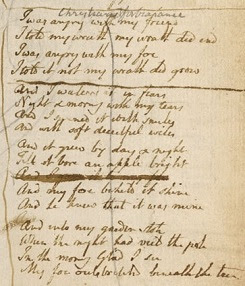 I like to read his books in bed at night though, just a few lines to savour as I drift into sleep. "... Blake very seldom talks nonsense," he says.
Songs of Experience
#49: A Poison Tree
(aka Christian Forbearance) ~1790
I was angry with my friend:
I told my wrath, my wrath did end.
I was angry with my foe:
I told it not, my wrath did grow.
And I watered it in fears,
 Night and morning with my tears:
And I sunned it with smiles,
And with soft deceitful wiles.
And it grew both day and night.
Till it bore an apple bright.
And my foe beheld it shine,
And he knew that it was mine.
And into my garden stole.
When the night had veild the pole;
In the morning, glad I see;
My foe outstretched beneath the tree.
Embodied in this poem of Blake's and in the gut-level Good Samaritan of Ivan Illich are the only counter-forces that I can imagine - though I see almost no evidence of them on the street, yet.
Let us not talk falsely now, the hour is getting late.

 The explosion at the Big Branch mine in West Virginia in April of last year was due to the mine owner’s negligence says this report, quite unequivocally. It begins with a list of the dead, and photographs of them before the tragedy - fitting.
Is anyone surprised? Or to find that the CEO at the time, Don Blankenship, has since retired? Or that Massey Energy has since been bought by Alpha Natural Resources? Or that ex-Admiral Bobby Inman is the new Chairman of the Board at Massey? Or that Bobby Inman also sits at the head of the board of Xe Services, formerly Blackwater USA? (Or U.S. Training Center, or USTC Holdings LLC or Forté Capital Advisors or whoever the fuck owns this shit-that-can't-be-named.)


 Let's just review what we know ... about psychopaths, about maladapted societies (à la Robert Edgerton mentioned above), about what on earth Barack Obama could possibly stand for, nice guy that he is ... about why it is better to shoot an unarmed Osama bin Laden in the head than bring him back alive.
And while each and every one of these scheisskopfs can, without the fear of contradiction, put a price tag on every damned thing that is in their realm - know this:
None of them along the line know what any of it is worth. (!)
It seems like everyone is suddenly talking about evolution; and Darwin, Wallace, Gould, Dawkins, even Lovelock ... Lovelock!? Hell, even Lamarck is back into the discussion! Evolution is itself evolving.
 Here's one I've read which at least mentions Wallace only in passing, and Lovelock not at all: The climate connection: climate change and modern human evolution by two k-k-Canadians - Renée Hetherington (erstwhile Liberal candidate in Saanich-Gulf Islands beaten by Elizabeth May) and Robert Reid, Emeritus Professor of Biology at UVic (who somehow maintains a nigh on zero presence on the Internet - good on 'im for that).
I know nobody ever reads anything on the Internet, but you can get a taste of the book here.
A reviewer wrote, "Happily, though, its value as a work of reference — particularly with regards to the detailed and well-written descriptions of climatic, environmental, and human changes across the last 135,000 years — will ensure it retains a place on student reading lists and bookshelves." So maybe it is also a ploy to get themselves onto lucrative undergrad reading lists and sell books d'you think?
There is a certain quality to a lot of the prose writing in this book; not exactly glib or polyanna or pretentious or, sententious, but something ... and it is replete with impenetrable and (it seems to me) unnecessary technical terminology. She is planning a version for the hoi polloi apparently - maybe that's it, more planning for a personal future, can't say. But the real flaw for me shows up in this final section of the main text (before the Appendices):9.3.3 Forewarning: the vulnerability of complex societies
The idea that complex societies are more vulnerable to environmental and climatic disruption was raised by a panel of scientists and humanists who participated in a workshop on Civilization and Rapid Climate Change organized by the University of Calgary's Institute for the Humanities in August 1987 (Dotto, 1988). The relatively stable Holocene environment allowed modern human societies to specialize, expand their trade and communication networks, develop interdependencies and become increasingly complex. This group recognized that in complex societies, decisions are centralized, resources are pooled and tasks are specialized. There is a high degree of interconnectedness and dependency between elements of society.
Today, with increased globalization, local economies have become more dependent on imports of food, energy and technology and have increasingly lost their capacity for self-sufficiency. Further, local problems increasingly stem from distant causes. Think here of the bankruptcy of Wall Street investment bank Lehman Brothers in September 2008 and the subsequent domino effect that generated a global economic crisis. There is also a tendency for those dominant parts of complex societies to resist changing behaviour the more standardized they become. This is because their way of doing business worked in a previously predictable, stable environment. Consequently there is a reluctance to change behaviour that worked well in the past.
However, it is precisely these characteristics that make modern complex societies vulnerable to collapse during times of rapid environmental change. For example, we depend on large uniform agricultural crops (monoculture) and the use of large energy-consumptive technologies such as fertilizers and pesticides to feed our growing population. But as a result we are making ourselves more vulnerable to even small changes in climate. A climate change that destroys one crop in a 12-crop monoculture system has a far greater impact on its consumers and producers than that same change has on a diverse agricultural system with one thousand varieties.
It is also true that societies that are more self-reliant and possess greater cultural, behavioural and intellectual diversity have a better chance for survival under conditions of mass disruption than those which are highly dependent and lack diversity. This is because when life support networks are cut off individuals and communities have a greater chance offending for themselves. This was highlighted by Dr. Úrsula Oswald Spring at the Climate/Security conference in Copenhagen in 2009 when she noted that in the aftermath of Hurricane Katrina in 2005 in New Orleans, 250 000 illegal Latinos were 'not there' so could not depend on the support system to help them. As a result they self-organized and survived by helping each other. A key factor in their survival was cooperation - with each other; flexibility - to adjust their behaviour; and resilience - the ability to persevere under difficult and perilous conditions. These realities highlight the importance of maintaining and teaching the skills of human survival, e.g., local crop production, tool and shelter manufacture and basic first aid skills. The ability to innovate, think outside the box, adjust to change at a moment's notice and choose cooperation rather than conflict when circumstances become trying are skills that are imperative if we are to successfully adjust to future climate change.
Nature and humankind have an adaptive capacity for change, but this is limited by the degree and intensity of change. How close an individual, society or natural system is relative to their tipping point or their capacity to adjust to change within a limited time is also critical. What influences that tolerance for change?
Our understanding of saltatory evolution supports the idea that dominant specialized species and societies have greater difficulty adjusting to rapid change than generalist nimble species that must live by their wits. These species have lived more on the periphery relative to specialized dominant groups and species must constantly respond to change in order to survive. Modern humans - Homo sapiens - are no different and we are currently the dominant species. Within the overarching H. sapiens family there are individuals and groups that are more flexible and open to novelty and diversity than others. This is generally because they have had to be just to survive. Our capacity to adjust to future climate change will be better in those groups and societies that are open and willing to accept difference and change. Further, impending climate change can and will stimulate adjustments in both development and behaviour, but the degree of acceptable change depends on how sensitive the organism, group or society is to change and how well the change is recognized and understood. If change is not recognized or understood, or if the change required is too great for the individual, organism or society to manage, or alternatively if they are not willing to adjust, then decline and even extinction prevails. As such, humans are not invulnerable to extinction.
Thus, understanding our past evolutionary relationship with climate allows us to better prepare for our future. It is our hope that this book helps its readers understand these relationships and the importance of its messages. Economic and environmental stress will result in behavioural change. Thus, change is on the way. Those who are open to change and diversity and start sooner will fare better than those who are not. Further, those who choose cooperation over confrontation will have a greater chance of adjusting and avoiding the negative consequences of war, famine and poverty. The risk of confrontation is extreme - the escalation of nuclear warfare could spell the end of Homo sapiens and many other species as well. The risk of cooperation is far less extreme - diversity will have to be embraced, those with more will likely have to consume less and share more. We will have to work together. Yet there is much to be gained in an evolutionary sense by participating in this era of human evolution. Perhaps the greatest of which are future generations.
Imperative in humanity's successful adjustment to impending rapid climate change will be a capacity for natural and social scientists, writers, artists and musicians to communicate complex information and ideas to the public. This will nourish the public's thirst for information about the frightening prospect of future climate change and provide a foundation on which we can build future individual and group behavioural change and from which can stem new government policy, political action hope and change. A drastic shift is needed in our behaviour to generate an immediate and global reduction in greenhouse gas emissions. If we seek solutions to a common goal we are far more likely to stimulate an advancement in human intelligence that will not only reduce our fossil fuel consumptive behaviour and alter the impact of present and future climate change, but will also reduce the extent and impacts of future climate and environmental change on H. sapiens and all other species on the planet on which we depend for our survival.
They seem unaware of Joseph Tainter's Collapse of Complex Societies; but let that go by.
If I just say that the one footnote I might have appreciated would have been to Úrsula Oswald Spring's remarks mentioned in this passage, will you understand my quibble? Because if the unruly Latinos survived Katrina in New Orleans better than the average (which I do not doubt although I had not heard the story before), then it almost certainly had zip zero nadinha to do with academics and/or mining consultants (our Renée collaborates with her husband Bob Thompson in an endeavour called RIT Minerals Corp. y'unnerstand).
I've chased Úrsula Oswald Spring around the web a bit; some kind of serious feminist on the UN payroll talking a lot about 'security' (this is where Gwynne Dyer came aboard remember) - I couldn't find the original story of the Latinos in New Orleans anywhere.
And that they stress communication so earnestly in the final paragraph is what? Irony? Self-sarcasm? A drastic shift is needed alright, but this ain't it, sorry.
They say we need 80% reduction of GHG by 2050 for ~2° but there's no baseline mentioned and no footnote. Doh!?
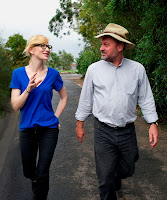 Even our Tim Flannery is getting in on the act again with his recent Here on earth: a natural history of the planet. Hobnobbing with the likes of Cate Blanchett. But how far we will get with bourgeois sentiment (which is what it mostly looks like to me) I'm not sure. It all begins to sound like echoes of Carl Sagan in a wide-eyed turtleneck duet with James Lovelock: "Gai-a, how I love ya, how I love ya, my dear old Gai-a!" And Alfred Russel Wallace was a Spiritualist aka (in Brazil) Spiritist; all gaga for Allan Kardec when I knew 'em. That doesn't make him a bad person; but it doesn't wash with me, sorry (and I say that having read The Spirits' Book and so on).
So ... fierce self-interest, incompetence in various flavours, sentiment mostly bourgeois, and general despair - all struggling for the wheel in a way; while anyone with anything to sell is cashing in quick and scurrying away towards whatever equivalent of an enthusiastic blow job in Rio they can imagine. (Or in Renée's case maybe it's learning Spanish.)

 The funny part about this latest religious scam by that fundamentalist k-k-Christian, wazizname ... Harold Camping, is that ... He's right!
Off by no more than a few years one way or the other in marking that moment when humankind, H. grǽdum, passes (passed?) the point of no return climate-wise on the way to extinction.
No smileys this week. Be well gentle reader.
Postscript:
I have been watching Mike Nichols films, some great ones; The Graduate, Carnal Knowledge, Primary Colors; and, some awful ones - Catch-22, Charlie Wilson's War ... and this morning I watched Wit (downloadable here).
 You could call it a literary movie (you see, there is a smiley after all), centred as it is on John Donne's sonnet:
Death be not proud, though some have called thee
Mighty and dreadfull, for, thou art not soe,
For those, whom thou think'st thou dost overthrow
Die not, poore death, nor yet canst thou kill mee;
From rest and sleepe, which but thy pictures bee,
Much pleasure, then from thee, much more must flow,
And soonest our best men with thee doe goe,
Rest of their bones, and soules deliverie.
Thou art slave to Fate, chance, kings, and desperate men,
And dost with poyson, warre, and sickness dwell,
And poppie or charmes can make us sleepe as well,
And better than thy stroake; why swell'st thou then?
One short sleepe past, wee wake eternally,
And death shall be no more, Death thou shalt die.
I can't say if the quibbling over punctuation is based upon scholarship or simply Nichols' desire for an effective kicker, but it doesn't really matter - semicolons and commas are not so important, not to me - and it does make for a better story.
I posted this short clip on YouTube.
I will say this for what it's worth: If "wee wake eternally," or not, is as it may be, and doesn't alter much either (two smileys you see).
A parting gift:
I'm feeling a bit guilty y'see. I set out this week determined to find some way to be positive and kind - and failed miserably - sort of like this. So it goes. People, women mostly, go about declaring that they will 'speak truth to power' and so on. Truth!? And if some knucklehead has the temerity to say that there are degrees of rape and that some are worse than others - they all immediately round on him, mind-fuck him, get him fired, and begin to strip in the streets. Progress I guess - I have always liked strippers. I remember Mitzi Dupree.
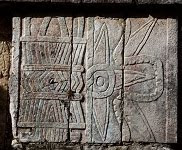
 Back in the day someone would go on a bad trip or drink too much tequila, and maybe you would hold a damp facecloth while they puked - and the next day you would laugh about it, poke fun, poke a bit of truth among the groans ... no more'a that nonsense!
"... on the French coast the light gleams and is gone;" (semicolon) compare and contrast with The Fugs The Divine Toe Part II (sorry, YouTube shitcanned it, I guess The Fugs are still getting royalties, that's funny ... here, try this):"as I see you standing in a sable robe and your breast that launched a thousand round pounds, you twirl to the light, your mons veneris shines like Chichen Itza, in the jungle dawn, I get HORNY HORNY HORNY HORNY HORNY HORNY HORNY HORNY HORNY HORNY HORNY HORNY ..."
Images running full circle here, from clitoridectomy to a pile of stone in the Mexican jungle representing mons veneris ... They did also set Dover Beach to music, sort of ... maybe another time.
Appendices:1. Facing Mount Kenya; the traditional life of the Gikuyu excerpt Chapter VI, Jomo Kenyatta, 1938.
2. Sick societies: challenging the myth of primitive harmony excerpt p 9-10, Robert Edgerton, 1992.
3. Mine Owner’s Negligence Led to Blast, Study Finds, Sabrina Tavernise, May 19 2011.
Facing Mount Kenya; the traditional life of the Gikuyu excerpt Chapter VI, Jomo Kenyatta, 1938.
[apologies, I have not ensured that this is a faithful copy of what is in the book, the Gikuyu phrases are neither spell-checked nor italicized, trying to read it all again simply required more energy than I have, and the plates were not in my edition, I would have to go down to the reference library to get copies of those ... and there is no telling when that might happen.]
CHAPTER VI
Initiation of Boys and GirlsTHE custom of clitoridectomy of girls, which we are going to describe here, has been strongly attacked by a number of influential European agencies — missionary, sentimental pro-African, Government, educational and medical authorities. We think it necessary to give a short historical background of the method employed by these bodies in attacking the custom of clitoridectomy of girls.
In 1929, after several attempts to break down the custom, the Church of Scotland Mission to Gikuyu issued an order demanding that all their followers and those who wish their children to attend schools should pledge themselves that they will not in any way adhere to or support this custom, and that they will not let their children undergo the initiation rite. This raised a great controversy between the missionary and the Gikuyu. The matter was taken up seriously by both educated and uneducated Gikuyu. Children of those who did not denounce the custom were debarred from attending the missionary schools. People petitioned the Government and educational authorities. During the petitioning period many of these deserted schools and churches were used for storing maize and potatoes. A "gentlemen's agreement" was reached between the Government and the missionaries. The ban on children attending the schools was lifted, but the missionaries maintained that teachers must be only those who had denounced the custom, for they hoped that teachers with this qualification would be able to mould the children in the way favourable to the missionary attitude. People were indignant about this decision and at once demanded the right to establish their own schools where they could teach their children without interference with the group custom. The cry for schools was raised high, and the result was the foundation of Gikuyu independent schools and Kareng'a schools. These schools are entirely free from missionary influence, both in educational and religious matters.
In 1930 the question of the custom of clitoridectomy was raised in the House of Commons and a committee of Members of Parliament was appointed to investigate the matter. The members of the committee included the Duchess of Atholl, Colonel Josiah Wedgwood, C. R. Buxton and others. The writer was invited to attend the committee meeting and give the Gikuyu's point of view. It was then agreed that the best way to tackle the problem was through education and not by force of an enactment, and that the best way was to leave the people concerned free to choose what custom was best suited to their changing conditions.
In 1931 a conference on African children was held in Geneva under the auspices of the Save the Children Fund. In this conference several European delegates urged that the time was ripe when this "barbarous custom" should be abolished, and that, like all other "heathen" customs, it could be abolished at once by law. That it was the duty of the Conference, for the sake of the African children, to call upon the Governments under which the customs of this nature were practised to pass laws making it a criminal offence for anyone who should be found guilty of practising the custom of clitoridectomy.
However, this urge for abolishing a people's social custom by force of law was not wholeheartedly accepted by the majority of the delegates in the Conference. General opinion was for education which will enable the people to choose what customs to keep and which ones they would like to get rid of.
It should be pointed out here that there is a strong community of educated Gikuyu opinion in defence of this custom. In the matrimonial relation, the rite de passage is the deciding factor. No proper Gikuyu would dream of marrying a girl who has not been circumcised, and vice versa. It is taboo for a Gikuyu man or woman to have sexual relations with someone who has not undergone this operation. If it happens, a man or a woman must go through a ceremonial purification, korutwo thahu or gotahikio megiro — namely, ritual vomiting of the evil deeds. A few detribalised Gikuyu, while they are away from home for some years, have thought fit to denounce the custom and to marry uncircumcised girls, especially from coastal tribes, thinking that they could bring them back to their fathers' homes without offending the parents. But to their surprise they found that their fathers, mothers, brothers and sisters, following the tribal custom, are not prepared to welcome as a relative-in-law anyone who has not fulfilled the ritual qualifications for matrimony. Therefore a problem has faced these semi-detribalised Gikuyu when they wanted to return to their homeland. Their parents have demanded that if their sons wished to settle down and have the blessings of the family and the clan, they must divorce the wife married outside the rigid tribal custom and then marry a girl with the approved tribal qualifications. Failing this, they have been turned out and disinherited.
In our short survey we have mentioned how the custom of clitoridectomy has been attacked on one side, and on the other how it has been defended. In view of these points the important problem is an anthropological one: it is unintelligent to discuss the emotional attitudes of either side, or to take violent sides in the question, without understanding the reasons why the educated, intelligent Gikuyu still cling to this custom.
The real argument lies not in the defence of the surgical operation or its details, but in the understanding of a very important fact in the tribal psychology of the Gikuyu — namely, that this operation is still regarded as the very essence of an institution which has enormous educational, social, moral, and religious implications, quite from the operation itself. For the present it is impossible for a member of the tribe to imagine an initiation without clitoridectomy. Therefore the abolition of the surgical element in this custom means to the Gikuyu the abolition of the whole institution.
The real anthropological study, therefore, is to show that clitoridectomy, like Jewish circumcision, is a mere bodily mutilation which, however, is regarded as the conditio sine qua non of the whole teaching of tribal law, religion, and morality.
The initiation of both sexes is the most important custom among the Gikuyu. It is looked upon as a deciding factor in giving a boy or girl the status of manhood or womanhood in the Gikuyu community. This custom is adhered to by the vast majority of African peoples and is found in almost every part of the continent. It is therefore necessary to examine the facts attached to this widespread custom in order to have some idea why the African peoples cling to this custom which, in the eyes of a good many Europeans, is nothing but a "horrible" and "painful" practice, suitable only to barbarians.
In the first place it is necessary to give the readers a clear picture of why and how this important socio-biological custom is performed.
Name of the Custom The Gikuyu name for this custom of rite de passage from childhood to adulthood is irua, i.e. circumcision, or trimming the genital organs of both sexes. The dances and songs connected with the initiation ceremony are called mambura, i.e. rituals or divine services. It is important to note that the moral code of the tribe is bound up with this custom and that it symbolises the unification of the whole tribal organisation. This is the principal reason why irua plays such an important part in the life of the Gikuyu people.
The irua marks the commencement of participation in various governing groups in the tribal administration, because the real age-groups begin from the day of the physical operation. The history and legends of the people are explained and remembered according to the names given to various age-groups at the time of the initiation ceremony. For example, if a devastating famine occurred at the time of the initiation, that particular irua group would be known as "famine" (ng'aragu). In the same way, the Gikuyu have been able to record the time when the European introduced a number of maladies such as syphilis into Gikuyu country, for those initiated at the time when this disease first showed itself are called gatego, i.e. syphilis. Historical events are recorded and remembered in the same manner. Without this custom a tribe which had no written records would not have been able to keep a record of important events and happenings in the life of the Gikuyu nation. Any Gikuyu child who is not corrupted by detribalisation is able to record in his mind the whole history and origin of the Gikuyu people through the medium of such names as Agu, Ndemi and Mathathi, etc., who were initiated hundreds of years ago.
For years there has been much criticism and agitation against irua of girls by certain misinformed missionary societies in East Africa, who see only the surgical side of the irua, and, without investigating the psychological importance attached to this custom by the Gikuyu, these missionaries draw their conclusion that the irua of girls in nothing but a barbarous practice and, as such, should be abolished by law.
On the other hand, the Gikuyu look upon these religious fanatics with great suspicion. The overwhelming majority of them believe that it is the secret aim of those who attack this centuries-old custom to disintegrate their social order and thereby hasten their Europeanisation. The abolition of irua will destroy the tribal symbol which identifies the age-groups, and prevent the Gikuyu from perpetuating that spirit of collectivism and national solidarity which they have been able to maintain from time immemorial.
Preparing for InitiationAbout a fortnight before the day of initiation the girl is out on a soecial diet, namelv. njahi and ngima ya ogembe, composed of a particular kind of Gikuyu bean (njahe), and together with a stiff porridge made of a small kind of grain (ogembe) ground into flour and mixed with water and oil. This diet is used in order to prevent the loss of blood at the time of initiation (physical operation) and also to ensure immediate healing of the wound, as well as a precaution against blood poisoning. The girl is properly taken care of by her sponsor, motiiri, who examines her and gives her all necessary instructions about the initiation ceremony. In this examination attention is directed to ascertaining that the girl is not near maturity and that menstruation is not likely to begin for at least a month after irua and the healing of the wound. She is also closely questioned to verify that she never had sexual intercourse or indulged in masturbation. If she has broken any of the prohibitions of the Gikuyu social codes, the girl makes a confession to the motiiri, who reports the confession to the girl's parents. The service of a motahekania, or a "family purifier," is then engaged to purify (koruta mogiro) the girl and prepare her for the irua.
Three or four days prior to the actual physical operation the girl is taken to the homestead where the ceremony is to take place. There she meets the rest of the initiates. The initiates are all introduced to the elder of the homestead and his wife, who adopt them as their children for the purpose of the irua. On this special day the boys and girls of the irua group, together with their relatives and friends, join in singing and dancing the whole night, and at the same time beating sugar-canes in mortars to prepare a special kind of beer for a ceremony called koraria morungu, which is supposed to keep the gods awake. This ceremony is considered an act of communion with the ancestral god (morungu) whose protection is invoked to guide and protect the initiates through the irua ceremony and at the same time to give them the wisdom of their forefathers. During the dancing and singing no girl or boy is allowed to go to bed, as this is regarded as missing the opportunity of direct contact with morungu, which would result in misfortune at the time of the irua.
On the morning after koraria morungu the fathers and mothers of the initiates are gathered together and partake of a feast at which the specially prepared beer is freely indulged in. This is done in the yard of the homestead. They sit in a circle. Then the children are called, one by one, according to their order of adoption. Now the ceremony called korathima ciana, or blessing the children, is performed. It includes marking certain symbols upon the forehead, the cheeks, round the eyes, the nose, the throat and the navel of the initiates with a sort of white chalk called ira (snow) obtained from Mount Kenya (Kere-Nyaga), the abode of the gods. One elder, who holds the senior office in the ceremonial council, or athuri a kerera, is entrusted with this duty of marking. He places the ira in the palm of his left hand and, dipping his right thumb in it, marks his candidates as they pass, one by one, before him. An old woman who is also a member of the ceremonial council follows and, with oil carried in a bottle-shaped calabash (kinando), anoints each girl on the head, round the neck and on the feet. The rest of the elders join in chorus, uttering blessings as each child passes by. On this occasion they use ceremonial language such as this: "Ciana irogea thaai, Thathayai Ngai thaaa-ai-dana irogea thai, thaaai-thai-thai-thaaa-i" which means — "Peace be with the children. Beseech Ngai (God) peace — peace, peace. Let peace be with the children — peace."
When this part of the ceremony is completed, the boys and girls leave the homestead, escorted by their relatives and friends, for their respective homes, singing festive songs as they go along.
On their arrival home, the girl is met at the entrance of the homestead by young married and unmarried women {ahiki na airetu) of the clan, who are singing, dancing and jumping joyously, and at the same time tossing small calabashes (thego) containing a special kind of gruel known as kenage. [See Plate V (b)] The girl then takes sips from each calabash held to her lips by the women. When this is finished the girl is left to rest until the day of the great ceremonial dance (matuumo).
The Great Ceremonial Dance (Matuumo) The day before the physical operation is performed the girl is called early in the morning to have her head shaved by the sponsor. All her clothes are removed, she is given a massage, after which her naked body is decked with beads lent to her by women relatives and friends. About ten o'clock in the morning relatives and friends gather at the girl's homestead. Here a short ceremony of reunion with the ancestors of the clan is performed, and a leader is chosen to lead the procession to the homestead where the irua is to take place.
The girl is provided with a bell (kegamba) which is tied on her right leg just above the calf, or sometimes above the knee, to provide the rhythm to the procession and also for the dance. The girl is put in the middle of the procession, which moves slowly, singing ritual songs until they reach the irua s homestead, where the procession is joined by the other initiates who are accompanied by other processions of relatives and friends dressed in their best.
The matuumo dances and songs begin at forenoon before the sun is overhead and continue the whole day. It takes place inside the homestead, but if the homestead is not large enough it is held on some convenient site which must be in close proximity to the homestead. The site is cleared and carefully examined to make sure that there is nothing on the ground that can hurt the feet of candidates while dancing.
The ceremonial doctor (mondo-mogo wa mambura) goes round the site sprinkling a brownish powder called rothuko on the ground, to counteract any evil design which might be directed against the candidates. This is followed by the elders who sprinkle honey beer (njoohi ya ooke) on the ground to appease the ancestral spirits and to bring them into harmony with those of the living. When the elders have completed their work of purifying the ground, the initiates enter the ground accompanied by their sponsors, relatives and friends, adorned with ceremonial dresses and green leaves; then all of them begin to dance. The crowd which has gathered for the great event forms a thick wall round the arena. [See Plate V (a)] While the dancing and singing is going on a ceremonial horn is blown at intervals, and before it is sounded, a little medicine (ifwanda) is rubbed inside; this medicine is believed to have power of chasing away evil spirits and preventing them from doing harm to the initiates.
Late in the afternoon an arch of banana trees and sugar-canes is built at the entrance of the homestead of the matuumo. The arch is decorated with sacred flowers of many shapes and colour; no unauthorised person may pass through the arch. The arch is considered as a medium through which the ancestral spirits can be harmonised with the irua and appeased, so as not to bring any misfortune on the ceremony in which the ceremonial council offers sacrifices to the god Ngai.
When the decoration of the arch is finished the dance is stopped. The irua candidates are lined up ready for the sacrifice which marks the end of matuumo. This consists of the boys running a race of about two miles to a sacred tree called mogumo or motamayo, which they have to climb and break top branches, while the girls gather round singing, and at the same time gathering the leaves and the twigs dropped by the boys.
To start the race a ceremonial horn is blown. At this point the'girls, who are not allowed to participate in the race, start out walking to the tree, escorted by a group of senior warriors and women singing ritual and heroic songs. When the girls are near the tree, the ceremonial horn is again sounded, this time indicating that it is time for the boys to start the race. The boys then start running in a great excitement, as though they were going to a battle. The truth is, it is really considered a sort of fight between the spirit of childhood and that of adulthood.
The crowd which has already gathered round the tree await the arrival of the boys in order to judge the winner of the race. They shout and cheer merrily as the excited boys arrive, raising their wooden spears, ready to throw them over the sacred tree. The significance of this ceremonial racing is the fact that it determines the leader of that particular age-group. The one who reaches the tree first and throws his wooden spear over the tree is elected there and then as the leader and the spokesman of the age-group for life. It is believed that such a one is chosen by the will of the ancestral spirits in communication with Ngai, and is therefore highly respected.
The girl who arrives at the sacred tree first is also regarded in the same way. She becomes the favourite, and all try to win her affections with the hope of marrying her.
The mogumo ceremony occupies only a short time. As stated above, the boys climb the tree, break the top branches, while the girls collect leaves and twigs dropped on the ground. These are later tied into bunches and carried back to the homestead to keep the sacred fire burning the whole night and also to be used in other rituals, especially in making the initiates' beds. The songs rendered by the relatives and friends round the foot of the tree generally pertain to sexual knowledge. This is to give the initiates an opportunity of acquainting themselves with all necessary rules and regulations governing social relationship between men and women.
At the completion of kuuna mogumo (breaking of the sacred tree), the boys and girls are lined up according to the order of their adoption. Here a ceremony of taking the tribal oath (muma wa anake) is conducted by the elders of the ceremonial council. The initiates promise by this oath that from this day onward they will in every respect deport themselves like adults and take all responsibilities in the welfare of the community, and that they will not lag behind whenever called upon to perform any service or duty in the protection and advancement of the tribe as a whole. Furthermore, they are made to promise never to reveal the tribal secrets, even to a member of the tribe who has not yet been initiated.
At the conclusion of the oath ceremony a group of senior warriors form at the head of the procession, followed by the initiates. Then the crowd flanks both sides of the procession as a bodyguard. They march slowly towards the homestead of the matuumo, carrying the leaves and twigs gathered from the sacred tree, mogumo. The initiates are warned never to look behind as they move along, for to do so would bring misfortune to them at the time of mm, and, furthermore, the childhood misdeeds which they have thrown over the sacred tree, mogumo, would come back to them. The songs they sing on the homeward march are directed towards denouncing all things that are not fit and proper for any adult member of the community to do. Moreover, the phrases embodied in these songs are to encourage the initiates to become worthy and honourable members of the adult community into which they are to be graduated.
When they arrive at the homestead, a ceremony of parting is performed, gotiihera ciana, that is, spraying the candidates with honey dews. The ceremonial council forms a circle in the courtyard; the leader of the ceremonial council holds a calabash containing honey juice mixed with milk, and a special Gikuyu medicine called oomo, which is supposed to impart bravery or endurance. He takes a mouthful of this liquid and, as the initiates pass through the arch, he sprays them with it. An elderly woman follows and does the same with another kind of liquid called gethambio. This is done in order to protect the initiates against fear, bad temptations and attacks of evil spirits. While this is going on, the initiates answer in unison: "Togotihenvo rerea rea njoke twerirageria," that is: "We have been sprayed with the stings of the bees which we have been longing for. We shall follow the wisdorn and the energy of the bees."
At the end of the ceremony the boys and girls are free to go to their respective homes to rest until next morning. Care is taken to protect them from anything that might inflict wounds upon them, as the shedding of blood is regarded as an omen of ill-luck. The initiates are guarded the whole night by senior warriors against outside interference. In every home a ceremonial doctor (mondo-mogo wa mambura) is assigned by the traditional council (njama ya kirera) to protect the initiates against any possible attacks from witchcraft and also against any temptation or enticement to indulge in sexual intercourse.
How the Girl is Operated on Early in the morning of the day of the physical operation the girl is called at cock-crow. She is fed with a special food (kemere kia oomo\ eaten only on this occasion, after which she is undressed, leaving only one string of beads across her shoulder, known as mogathe wa mwenji (present for the barber). This is given to her sponsor as a symbol of lasting friendship and as a bond of mutual help in all matters. It also signifies that henceforth the girl is supposed to hide nothing from her sponsor nor deny her guardian anything demanded from her, even if it be the last she possesses.
After all necessary arrangements have been made, the girl is escorted to a place appointed for the meeting of all the candidates. From there they are led to a special river where they bathe. The boys are assigned to a particular place while the girls bathe at a point below them, singing in unison: "Togwe-thamba na munja wa ecanake" which means: "We have bathed with the cream of youth."
This is done before the sun rises, when the water is very cold. They go up to their waist in the river, dipping themselves to the breast, holding up the ceremonial leaves in their hands; then they begin shaking their wrists, dropping the leaves into the river as a sign of drowning their childhood behaviour and forgetting about it forever. The initiates spend about half an hour in the river, in order to numb their limbs and to prevent pain or loss of blood at the time of operation. The sponsors superintend to see that the initiates bathe in the correct manner, while the mothers, relatives and friends are present, painted with red and white ochre (therega no. moonyo), singing ritual and encouraging songs. The warriors keep guard to prevent the spectators or strangers from coming too near to the bank.
When the bathing is completed, all the initiates are lined up following their order of adoption. The ceremonial horn is blown to warn the passers-by that the initiates are about to march and that the road must be cleared. No one is allowed to pass across the appointed path, as this is regarded as bad luck (motino). A small boy and a girl are chosen, in accordance with what the Gikuyu believe to be a lucky omen (nyoni-ya-monyaka, " lucky bird "). Their duty is to carry branches of creepers, called mokengeria and mwambaigoro, which is believed to have certain antiseptic and healing powers. The boy and the girl, with their branches of creepers, stand at the entrance of the homestead, in order to be the first to meet the initiates on their arrival.
As the candidates approach, a special ceremonial horn is sounded rhythmically. The initiates advance slowly towards the homestead with both hands raised upwards, elbows bent, pressed against their ribs, with the fists closed and thumbs inserted between the first and second fingers, kuuna thano. This signifies that they are ready to stand the operation firmly and fearlessly.
Unlike the previous day the songs take on an entirely different form. There is no more dancing and jumping. The singing is of a mournful character, in slow and gentle voices. This is a moment of great excitement and anxiety especially for the mother and father whose first-born is to be initiated, for not only is their boy or girl passing from childhood to adulthood, but the father and mother are to be promoted to a higher status in the society. They all join in singing songs of anxiety, "Twafdrwoko torub twa-gucithio motongoro ?" which means : "Where are we led to in this tedious procession?" In the meanwhile the elders select a place near the homestead where the operation is to be performed. This place is called iteeri.
Here a clean cowhide, tanned and polished, is spread on the ground; the ceremonial leaves called mathakwa are spread on the hide. The girls sits down on the hide, while their female relatives and friends form a sort of circle several rows thick, around the girls, silently awaiting the great moment. No male is allowed to go near or even to peep through this cordon. Any man caught doing so would be severely punished. [Because of this rule, the photographs (Plate V (c) and (d)) represent boys. But the girls' procedure is identical except for the physical operation itself.]
Each of the girls sits down with her legs wide open on the hide. Her sponsor sits behind her with her legs interwoven with those of the girl, so as to keep the girl's legs in a steady, open position. The girl reclines gently agalott sponsor or motiiri, who holds her slightly on the shoulders to prevent any bodily movement, the girl meanwhile staring skywards. After this an elderly woman, attached to the ceremonial council, comes in with very cold water, which has been preserved through the night with a steel axe in it. This water is called mae maithanwa (axe water). The water is thrown on the girl's sexual organ to make it numb and to arrest profuse bleeding as well as to shock the girl's nerves at the time, for she is not supposed to show any fear or make any audible sign of emotion or even to blink. To do so would be considered cowardice (kerogt) and make her the butt of ridicule among her companions. For this reason she is expected to keep her eyes fixed upwards until the operation is completed.
When this preparation is finished, a woman specialist, known as moruithia, who has studied this form of surgery from childhood, dashes out of the crowd, dressed in a very peculiar way, with her face painted with white and black ochre. This disguise tends to make her look rather terrifying, with her rhythmic movement accompanied by the rattles tied to her legs. She takes out from her pocket (mondd) the operating Gikuyu razor (rwenji), and in quick movements, and with the dexterity of a Harley Street surgeon, proceeds to operate upon the girls. With a stroke she cuts off the tip of the clitoris (rong'otho}. As no other part of the girl's sexual organ is interfered with, this completes the girl's operation. Immediately the old woman who originally threw the water on the girls comes along with milk mixed with some herbs called mokengeria and ndogamoki, which she sprinkles on the fresh wound to reduce the pain and to check bleeding, and prevent festering or blood poisoning. In a moment each girl is covered with a new dress (cloak) by her sponsor. At this juncture the silence is broken and the crowd begins to sing joyously in these words: "Ciana ciito ire kooma ee-ho, nea marerire-ee-ho" which means: "Our children are brave, ee-ho (hurrah). Did anyone cry? No one cried — hurrah !"
After this the sponsors hold the girls by the arms and slowly walk to a special hut which has been prepared for the girls. Here the girls are put to sleep on beds prepared on the ground with sweet-smelling leaves called marerecwa, mataathi and maturanguru. The two first mentioned are used for keeping flies away or any other insect, and also to purify the air and counteract any bad smell which may be caused by the wounds, while the last-named is purely a ceremonial herb. The leaves are changed almost daily by the sponsors who are assigned to look after the needs of the initiates (irui). For the first few days no visitors are allowed to see the girls, and the sponsors take great care to see that no unauthorised person approaches the hut. It is feared that if someone with evil eyes (gethemerigo) sees the girls it will result in illness.
Healing of the Wound At the time of the surgical operation the girl hardly feels any pain for the simple reason that her limbs have been numbed, and the operation is over before she is conscious of it. It is only when she awakes after three or four hours of rest that she begins to realise that something has been done to her genital organ. The writer has learned this fact from several girls (relatives and close friends) who have gone through the initiation and who belong to the same age-group with the writer.
When the girl wakes up the nurse who is in attendance washes her with some kind of watery herb called mahoithia (drainers or dryers). After the washing the wound is attended with antiseptic and healing leaves called kagutwi or matei (chasers or banishers). The leaves are folded together, about two inches long, half an inch wide and quarter of an inch thick; then they are dipped in oil maguta ma mbariki (Gikuyu castor oil) to prevent them sticking on the wound and also to prevent the wound from shrinking. The bandage is then placed on the wound between Ulna majora to keep the two lips apart and prevent them from being drawn together while the wound heals.
The girl sits down with her legs closed together so as to keep the bandage in position. Frequently the girl is carefully examined by the nurse, and whenever she urinates, the nurse is there ready to clean the wound and put on a new bandage. The old bandage is hidden away to ensure that no man shall cross over it or put his foot on it, for such an act would bring misfortune to the man or to the girl.
For the first week after her initiation the girl is not allowed to go for a walk or even to touch with her bare hands anything in the way of food. The nurse puts the girl's food on a banana leaf, called ngoto or icoya, which serves as a plate. The leaf is lifted to the mouth without the girl actually touching its contents with her hands. The food eaten by the invalids is supplied by the parents, relatives and friends. The initiates, both boys and girls, eat collectively all food, irrespective of where it comes from, for all contributions are kept in one place in charge of the nurses and shared in common by the initiates, who refer to one another as sisters and brothers. The invalids are entertained by their sponsors, who sing them encouraging songs, in which they bring out vividly the experience they gained after they were circumcised, that in a few days tHeir wounds will heal and soon they will be able to go out jumping and dancing. These songs have a great psychological effect on the minds of the initiates, for they strongly believe that what has happened to their predecessors will also happen to them. With this in view their thoughts rest not on the operation, but on the day when they will again appear in public as full-fledged members of the community.
On the sixth day the sponsors make a full report to the ceremonial council; if all initiates are well and can walk, a ceremony of gotonyio or gociarwo (which means to be entered or born) is arranged on the eighth day. If all are not well the ceremony is postponed until the twelfth day, for no ceremony would be arranged on the seventh, ninth or eleventh day after any event has taken place. Uneven days are considered by the Gikuyu to be unlucky for embarking on any important business.
On the day appointed the parents gather at the homestead of the irua, bringing with them presents in the way of beer (njohi or ooke}, bananas and vegetables. The ceremony consists of killing a selected sheep, the skin of which is cut into ribbons (ngwaro) which are put on the wrists of the boys and girls. The elder who has adopted the children at the time of irua stands at one side of the entrance of his wife's hut, while his wife stands on the other side facing him. The rest of the elders with their wives stand in the courtyard in two rows, facing one another. The children are called to appear before the elders. As they pass through between the two rows, the elders utter blessings and at the same time touch them on the head with sacred leaves called mataathi and maturanguru. At the entrance of the hut the mother and father put the ngwaro on the wrists of the boys and girls as they enter the hut. After the initiates have entered the hut the mother and father follow them. The two go to bed while the children remain seated. The door (riige) is closed and silence is maintained, both by those inside the hut and those outside. In a short moment the mother begins to groan as though she were in great pain; the father gets up and opens the door quickly. He calls out for mociarithia (a midwife), an elderly woman, who comes in carrying the gut of the sheep which has been killed. It is placed on a hide where the mother is sitting. Another woman comes in and cuts the gut. At this juncture the boy initiates emit a roar as of a lion, gethamaro, and the girls join in applauding with Ngemi-a-ri-ri-ri-i-ri. After this the gut is cut in a long ribbon, and while the initiates stand in one group close together the ribbon encircles them, being tied so as to cover the navel of those on the outside of the circle. They stand in this position for a few minutes; then the midwife comes along with a razor dipped in sheep's blood and cuts the ribbon in two. This symbolises the cutting of the umbilical cord at birth. This is done to express the rebirth of the initiate. Another woman then comes carrying ceremonial leaves (mathakwa) sprinkled with blood, in which she wraps the ribbon which has just been cut. This is similar to the afterbirth, and is put on the mathahva and carried outside to be buried. When the woman appears outside, the parents, who are still seated, give a round of applause, saying : " Ciana irogea ohoro, thaai—thathayai Ngai thaai" —" Peace be with the children, peace—beseech ye, Ngai (God) peace."
After this the elder who has adopted the children comes out with his wife, followed by the children. They form a big circle round the fire on which the sheep's meat has been roasted. An elder of the ceremonial council takes the chest of the sheep which has been roasted (get/tori) and stands up facing Kere-Nyaga, with both hands held aloft. The elder sings a hymn, offering prayers to Ngai. He tears pieces from the meat with his teeth, spits them on the ground, starting from north, east, south, west and ending north. He hands over the meat to the elder of the homestead and his wife, who follow the same example. The two then, holding the meat together, pass it round to each child, who tears the meat in the same manner. The elder and his wife address the children as: " My tribal son or daughter "; the children answer: " My tribal father or my tribal mother."
The words used are : Father to son : " Wanyu-Baba j " son to father: " Wanyu-Baba" Mother to son: " Wakiawa;' son to mother: " Wakiamaito" Mother to daughter: " Wakeri;" daughter to mother: " IVakeri" Father to daughter : " Wa-kia-mwari j " daughter to father : " Wa-kia-Baba"
This signifies that the children have now been born again, not as the children of an individual, but of the whole tribe. The initiates address one another as " Wanyu-Wakint" which means " My tribal brother or sister." When the ceremony is completed all burst into ritual song. They bid farewell to one another and then leave the homestead under the escort of their relatives. On the arrival at their respective homes a sheep or goat is killed by the parents to welcome them home again and anoint them as new members of the community (koinokai na kohaka mwanake or moiretu maguta). At this ceremony the parents are provided with brass ear-rings, as a sign of seniority. This is done when the first-born is initiated.
For a period of three or four months, according to the rules of various clans, the initiates do not participate in any work. They devote most of their time to going around the district singing the initiates' song called waine. In this several groups take part. The song takes place in the field and is performed only in daytime. The initiates stand in a big circle holding several sticks (micee) in their hands. A bunch of micee is held in the left hand while one stick is held in the right hand. In this manner the initiates beat the micee according to the rhythm of the song. The inner circle is kept clear for the favourites from various groups—namely those who were the first to reach the sacred tree. They enter the circle two by two, a boy and a girl. As they appear in the arena the sticks are beaten rhythmically by all, whilst at the same time they utter compliments. These meetings afford the initiated boys and girls opportunities of coming into contact with and knowing one another intimately.
At the end of the holiday period, a day is fixed for the initiates to return to the homestead where the irua took place. Here the final ceremony of cleansing or purification is performed. This is called menjo or gothiga. Up to this time the initiates have been regarded as children (ciana) or new-comers (ciumert), and, as such, they cannot hold any responsibility in the community, for they are in their transitional period. Neither juvenile nor adult laws can be applied to them, and thus they form a sort of free community of " merry-go-round."
On the day appointed for the ceremony, people gather from far and near to join in the festival dance in which the " new-comers" are introduced into the community. The ceremony consists of shaving the heads (kwenja) of the boys and girls. The clothes and ornaments worn during the transitional period are discarded; their bodies are painted with red ochre mixed with oil, after which they are dressed in new clothes. The boys are provided with warriors' equipment; the girls are adorned with beads, armlets and other adornments. Then they are led to the dance, where they are introduced to the assembly as full-fledged members of the community. While the dance is going on, mothers and fathers partake of a feast of beer-drinking (njohi), which usually takes place during all solemn functions.
The wound normally requires a week to heal, but, of course, there are some cases which take longer, generally due to negligence on the part of the girl or the nurse in applying the healing leaves in the proper way. Such cases are few, but result in a septic condition, and the formation of much scar tissue on the area of the labia majora, which may make childbirth difficult. Cases of this nature sometimes find their way to hospitals and attract the attention of both the missionary and official doctors, who then and there, without careful investigation of the system of female circumcision, attack the custom of clitoridectomy in general, asserting that it is barbaric and a menace to the life of the mothers. To strengthen their attacks on this custom, these " well-wishers " have gone so far as to state that almost every first child dies as a result of this operation at the time of initiation, and that the operation is more severe to-day than it was formerly. Irresponsible statements of this kind are not to be taken too seriously, for it must not be forgotten that very few of the normal cases of childbirth ever come to the notice of European doctors. The theory that " every first child dies as a result of the operation " has no foundation at all. There are hundreds of first-born children among the Gikuyu who are still living, and the writer is one of them.
The missionaries who attack the irua of girls are more to be pitied than condemned, for most of their information is derived from Gikuyu converts who have been taught by these same Christians to regard the custom of female circumcision as something savage and barbaric, worthy only of heathens who live in perpetual sin under the influence of the Devil. Because of this prejudiced attitude, the missionaries are at a disadvantage in knowing the true state of affairs. Even the few scientifically minded ones are themselves so obsessed with prejudice against the custom that their objectivity is blurred in trying to unravel the mystery of the irua.
With such limited knowledge as they are able to acquire from their converts or from others, who invariably distort the reality of the irua in order to please them, these same missionaries pose as authorities on African customs. How often have we not heard such people saying: " We have lived in Africa for a number of years and we know the African mind well?" This, however, does not qualify them or entitle them to claim authority on sociological or anthropological questions. The African is in the best position properly to discuss and disclose the psychological background of tribal customs, such as irua, etc., and he should be given the opportunity to acquire the scientific training which will enable him to do so. This is a point which should be appreciated by well-meaning anthropologists who have had experience of the difficulties of field-work in various parts of the world.
Sick societies: challenging the myth of primitive harmony excerpt p 9-10, Robert Edgerton, 1992.
It is very difficult to be precise about the frequency with which traits that may have been maladaptive occurred in these small societies because the existing corpus of ethnographic accounts so seldom addresses the possibility that some of the beliefs or practices of the people being described might be anything other than adaptive. If one were to select a substantial number of ethnographic monographs more or less at random, probably no more than a handful would contain an analysis of the maladaptive consequences of any particular belief or practice. On the contrary, if seemingly paradoxical, irrational, bizarre, inefficient, or dangerous beliefs or practices are described at all—and very often they are not—they are usually presumed to be adaptive and are treated as if they must serve some useful purpose. For example, even the most extreme forms of penile mutilation— slashing open the urethra, scourging it with abrasive stalks of grass or other plants, mutilating the glans or infibulating it—have typically been analyzed in the ethnographic literature (but not the psychiatric) not as irrational, nonadaptive, or maladaptive practices but in terms of their positive social, cultural, or psychological consequences.
Similarly, the practice of Pharanoic circumcision or female genital infibulation, common in parts of Muslim Northeast Africa, involves slashing away a girl's clitoris and both sets of vaginal labia. The wound is sutured together, leaving an opening the size of a matchstick for the passage of urine and menstrual blood. When young women are married, this small opening must be surgically enlarged to permit sexual intercourse. In addition to inflicting great pain, these procedures carry a considerable risk for infection, infertility, and even death. Nevertheless, anthropologists have commonly chosen to interpret infibulation as an adaptive practice because the people who practice it zealously defend it and because it can readily be seen how it reinforces values of female purity and family honor. That most societies in the world, including most Islamic societies, have managed to cherish female purity and family honor without practicing infibu-lation is rarely acknowledged.
Mine Owner’s Negligence Led to Blast, Study Finds, Sabrina Tavernise, May 19 2011.
WASHINGTON — In the first comprehensive state report on the 2010 coal mine disaster in West Virginia, an independent team of investigators put the blame squarely on the owner of the mine, Massey Energy, concluding that it had “made life difficult” for miners who tried to address safety and built “a culture in which wrongdoing became acceptable.”
The report, issued Thursday by an independent team appointed by the former West Virginia governor, Joe Manchin, and led by the former federal mine safety chief Davitt McAteer, echoed preliminary findings by federal officials that the blast could have been prevented if Massey had observed minimal safety standards.
But it was more pointed in naming Massey as the culprit, using blunt language to describe what it said was a pattern of negligence that ultimately led to the deaths of 29 miners on April 5, 2010, in what was the worst American mining disaster in 40 years.
“The story of Upper Big Branch is a cautionary tale of hubris,” the report concluded. “A company that was a towering presence in the Appalachian coalfields operated its mines in a profoundly reckless manner, and 29 coal miners paid with their lives for the corporate risk-taking.”
A spokesman for Virginia-based Massey was not available for comment Thursday morning. Company executives invoked their Fifth Amendment rights, and refused to be interviewed. The 120-page report chronicles the explosion, pieced together through months of interviews, documents, data and correspondence. Workers at the mine had long known the conditions were risky, and the report opens with a passage about the fear that one miner felt the day before he died in the disaster.
“Man, they got us up there mining, and we ain’t got no air,” the miner, Gary Wayne Quarles, told his friend Michael Ferrell, who talked to investigators. “I’m just scared to death to go to work because I’m just scared to death something bad is going to happen.”
The report goes on to say that a “perfect storm” was brewing inside the mine, combining poor ventilation, equipment whose safety mechanisms were not functioning and coal dust, which, contrary to industry rules, had been allowed to accumulate, “behaving like a line of gunpowder carrying the blast forward in multiple directions.”
Investigators also take issue with the conclusion offered by Massey officials — that the explosion occurred when a giant burst of methane bubbled from the ground, a natural event that would have been impossible to predict or control.
The damage inside the mine was not consistent with that theory, investigators said. Among the evidence was the bodies of the miners in the area of the main explosion: only two had methane in their lungs.
“If, as Massey investigators maintained, one million cubic feet of methane had been suddenly released, the result would have been a five million cubic foot flame going across the face and throughout the tailgate entries in both directions,” the report said, referring to areas of the mine.
It added, “Evidence found during the investigation does not suggest a force of this magnitude.”
Down
 Peter Kent formally withdraws from Kyoto (and the world, and our collective fate).
 One MP got it right, Justin Trudeau:
 But what about the shareholders, who are they? Who owns the shares? Who buys and sells striving for profit and who gets the dividends? Individuals? Yes; and estate funds created by loving husbands to secure loving widows, and banks, and pension funds, and unions. Even the sacred credit-unions trade in stocks don't they?
 And the 1% grows and grows until it's 99% again. This must be the dialectical snake eating its own tail; and getting fat doing it?
 I also note that the half-dozen newsletters I get are all mad for donations just now (not to mention Wikipedia) - something to do with Christmas perhaps. Dozens and dozens of emails. They have all had donations already, more than I can afford; and the repeated entreaties grate on the few remaining nerves.


 I set out to draw a line, threading through John Porter's Vertical Mosaic (there is neither preface nor conclusion to it or they would be posted here), through the story of Jean Billard's wife in the 2nd last post, through Gwynne Dyer's article in the last post, to an old memory of a day in Glen Milne's class ("boys and girls are fishin' together") when Jim Weller from Public Works described a hierarchy; the 'planning system' was it? No, it was 'The Project Delivery System' - that must be why I have kept the notes all these years. I didn't even know how to spell 'feasibility' in those halcyon days; and it was Glen who insisted that we learn how to spell 'hierarchy' too.